Insights · AI

Who gains the leverage, who compounds it, and the parts of the work a model cannot take from you.

Breno A. Beirigo

14 August 2026

Interpolation versus extrapolation

Interpolation repeats the familiar. Extrapolation creates identity.

Sci-fi classic Extrapolation
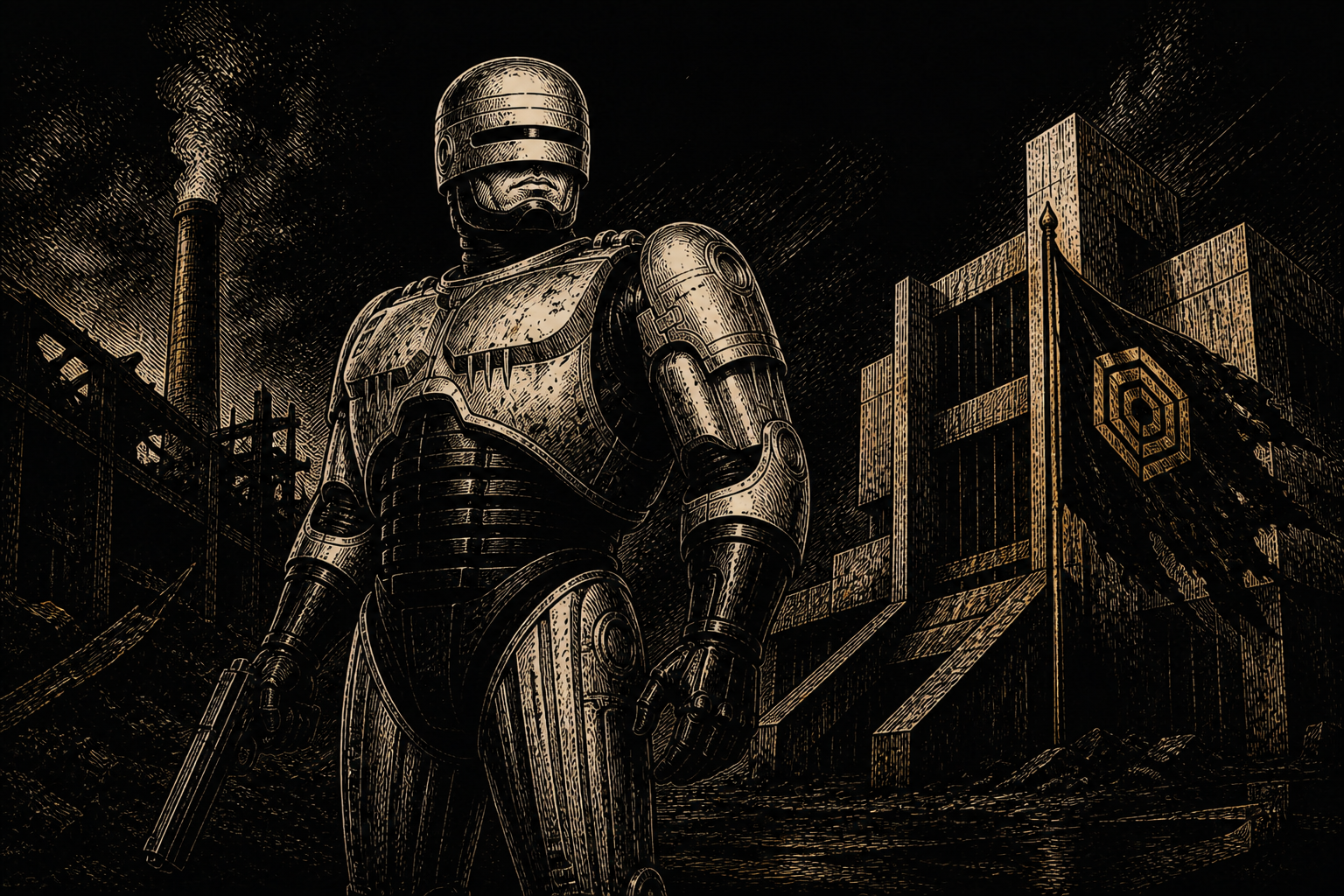
The 1987 RoboCop stands in a ruined industrial Detroit streetscape, rendered as an expressive ivory-and-brass engraving on black.

RoboCop (1987) 88%critics 84%audience Certified fresh

VS

Bland action thriller Interpolation

The 2014 RoboCop advances through a polished corporate plaza, rendered as an expressive ivory-and-brass engraving on black.

RoboCop (2014) 49%critics 49%audience Rotten

Interpolation tends toward the generic. Extrapolation creates identity.

AI is sea level

A shared baseline, not a summit.

↘ Over-reliance lowers the ceiling

Distinctive work moves toward average.

shared-model average

↗ AI raises the floor

Weak work moves toward average.

Use AI to reach the surface. Bring your own judgment above it.

Lulu Cheng Meservey, via @clipsofcrypto (n.d.)

The Jevons paradox of AI

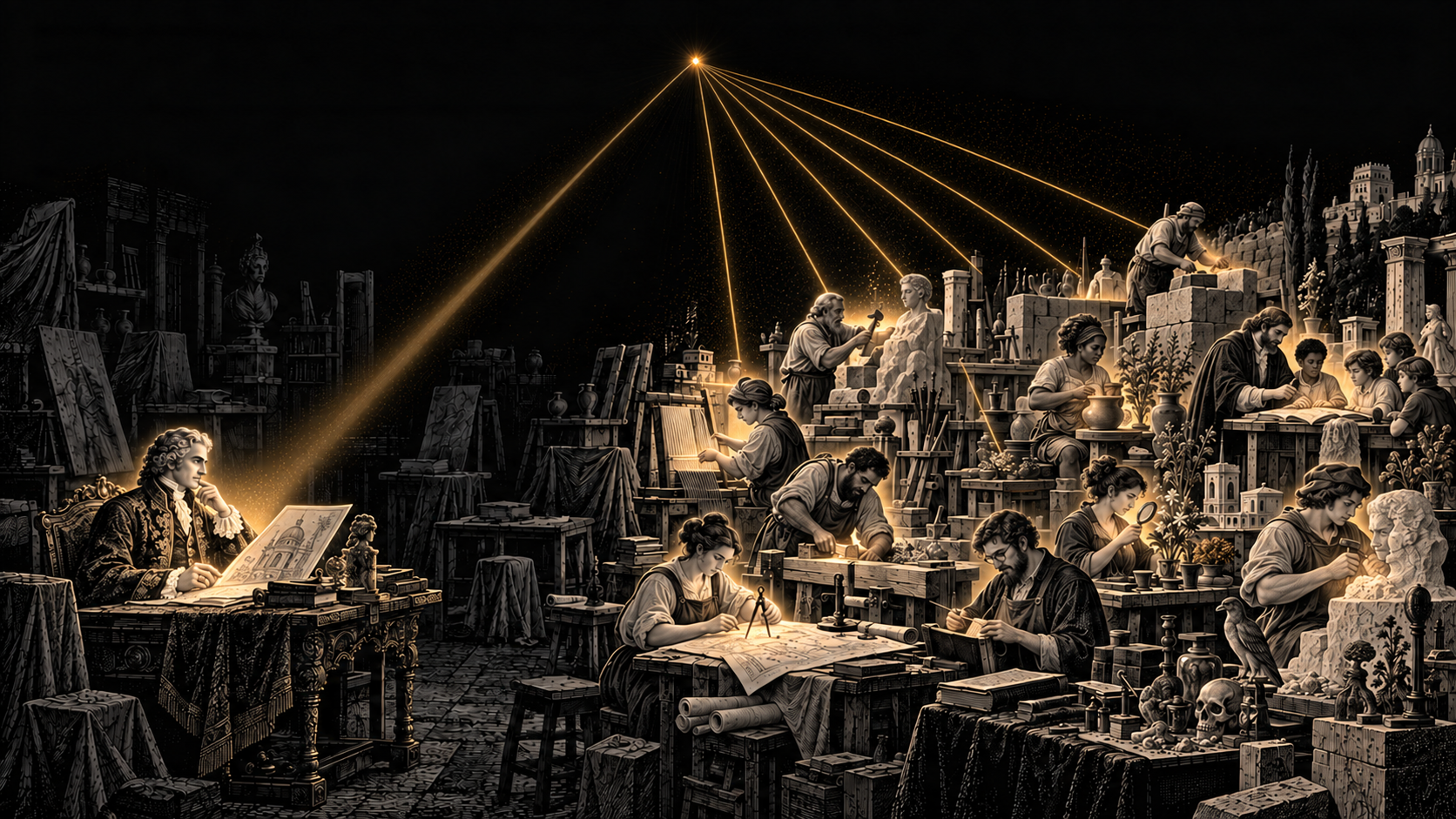
Figure 1: One aristocratic patron receives a concentrated AI light, while many smaller rays illuminate varied forms of human work.

Cheaper AI

Lower cost unlocks many more uses.

Jevons paradox

Each task costs less. Total AI use can still rise.

Expensive AI

Only a few uses justify the cost.

AI can create a Matthew effect

Experts use the same AI to frame, verify, and compound better decisions.

Same capability AI

Expert judgment Frames the real problem ⟶ Tests against the domain ⟶ Builds better next questions

Novice judgment Delegates the framing ⟶ Accepts plausible output ⟶ Builds shallow fluency

The gap is cumulative advantage

“To everyone who has, more will be given, and he will have an abundance. From the one who has not, even what he has will be taken away.” Matthew 25:29 · ESV, shortened

Who gains the leverage

“AI won’t replace programmers, but rather make it easier for programmers to replace everyone else.”

Naval Ravikant

AI CAPABILITY × PROGRAMMING JUDGMENT ⟶ MORE WORK BECOMES PROGRAMMABLE

The opportunity cost of handwritten code

“Writing code by hand is no longer an economically viable skill for most programmers at most companies.”

David Heinemeier Hansson, Rails World 2026

The scarce work becomes deciding what deserves to ship.

Human slop preceded AI slop

Two hands draw from the same printer's type case, producing repeated pages on one side and a distinct composition on the other.

Language is open source

Commodity content

Repeats what people already know.

Original content

Adds an idea that was not there before.

A human can write either.

The student as a lossy proxy

A student mechanically carries a corrected page between an AI-like light and a teacher, while the light bypasses the student's head.

Teacher feedback can improve the next answer without improving the student.

Learning begins when the student can defend the choice.

Who is using whom?

The same tools can create opposite relationships.

Reverse centaur AI → you

An inverse centaur with a human worker's body and a horse head, its blank eyes mesmerized by an artificial mirage of light.

The system chooses the route, pace, and task.

ride-hailing · delivery · picking

WHO LEADS?

Centaur You → AI
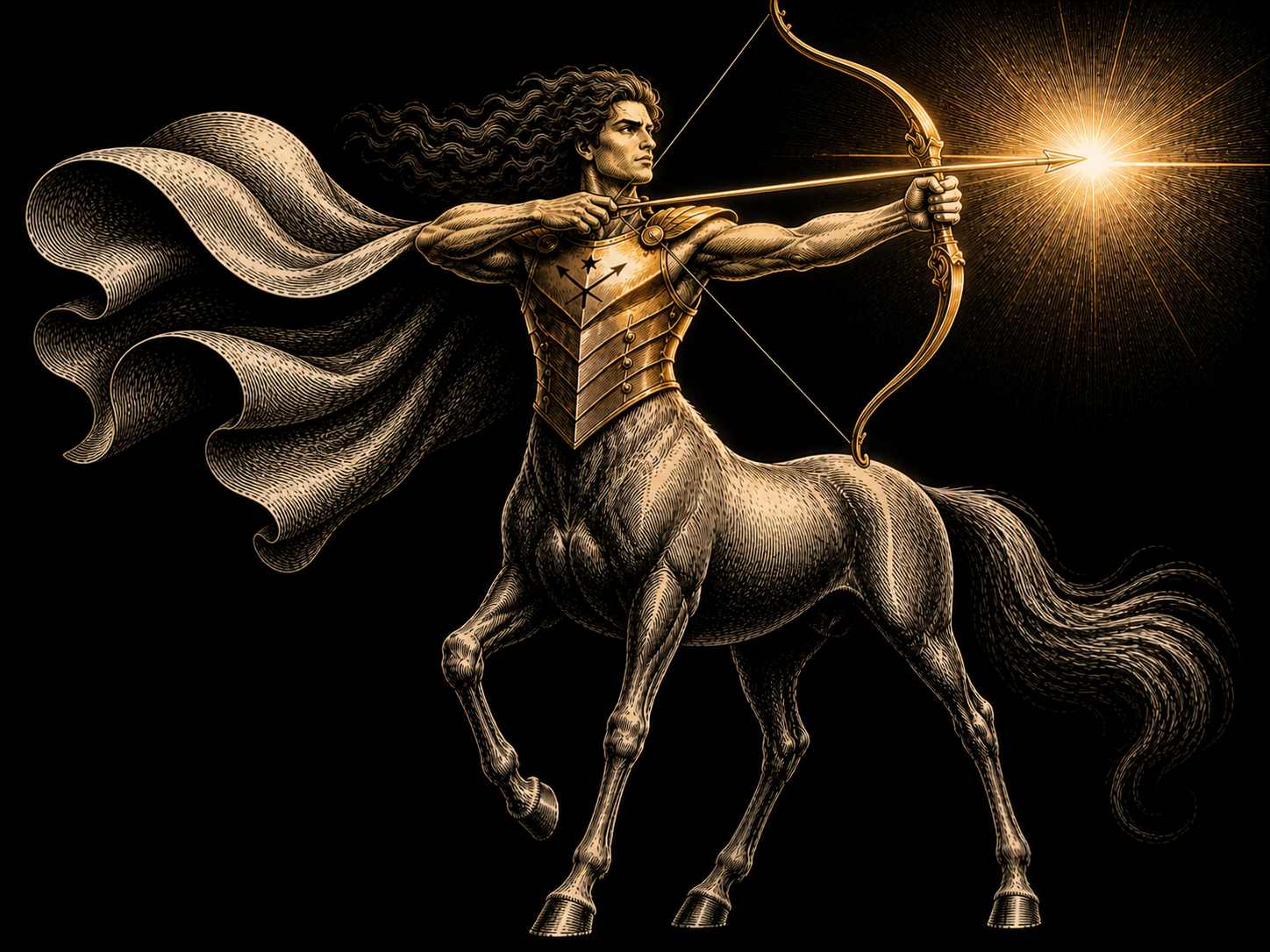
A visionary centaur leader in Sagittarius-inspired armor aims a drawn bow toward the horizon, guided by an AI-like light glowing at the arrow tip and illuminating his face.

You choose the goal, constraints, and judgment.

research · analysis · creation

The goal: keep the human in the head.

The panopticon is already here

AI joins a surveillance system that already records daily life.
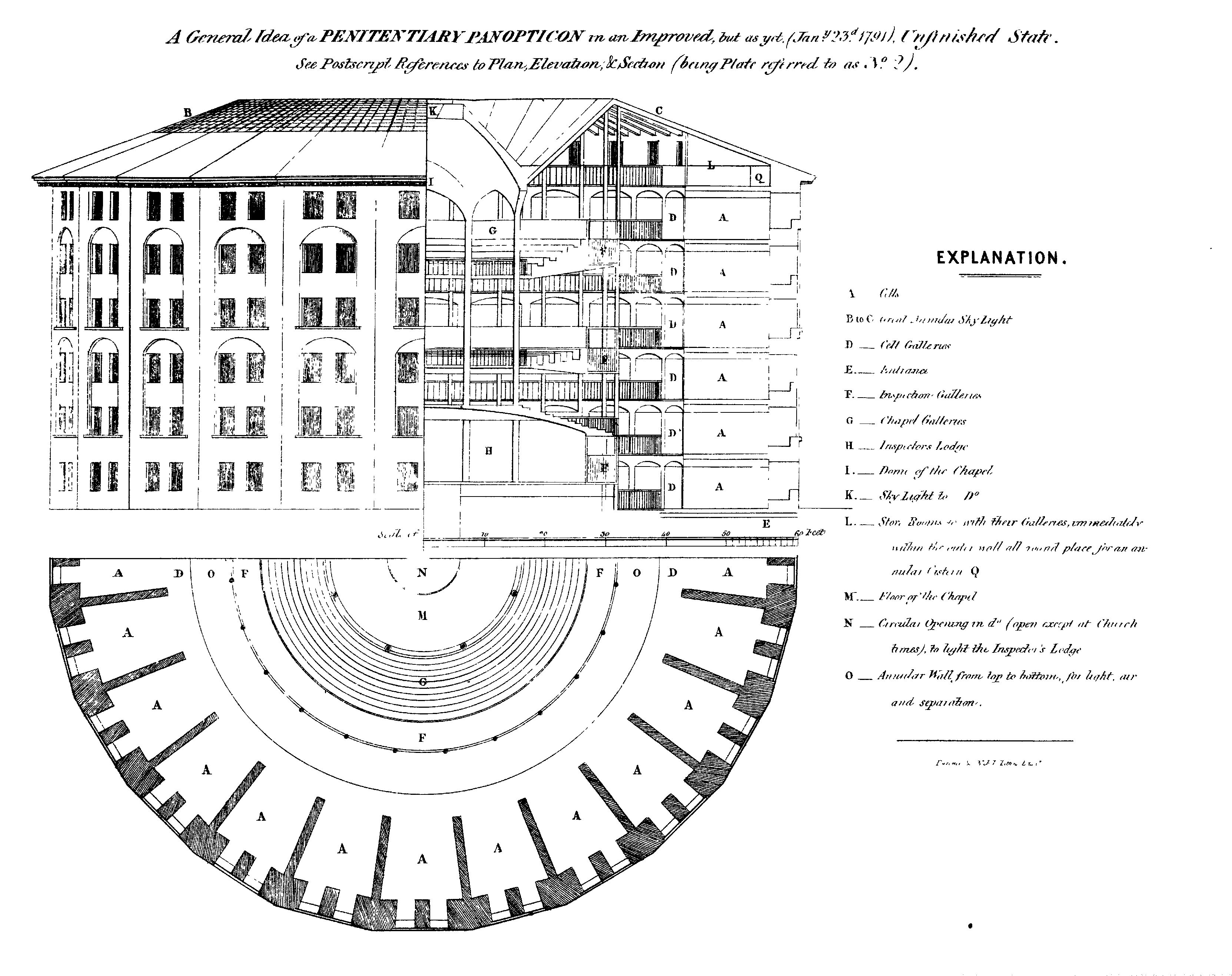
Jeremy Bentham's Panopticon plan, showing a circular prison organized around a central inspection point.

Bentham’s Panopticon plan, 1791 (published 1843)

The infrastructure of observation was already in place.

AI makes it easier to infer identity, intent, and risk from what it records.

Trust depends on who can act on the inference and whether people can challenge it.

The Spartan rule of AI

Don’t get caught.
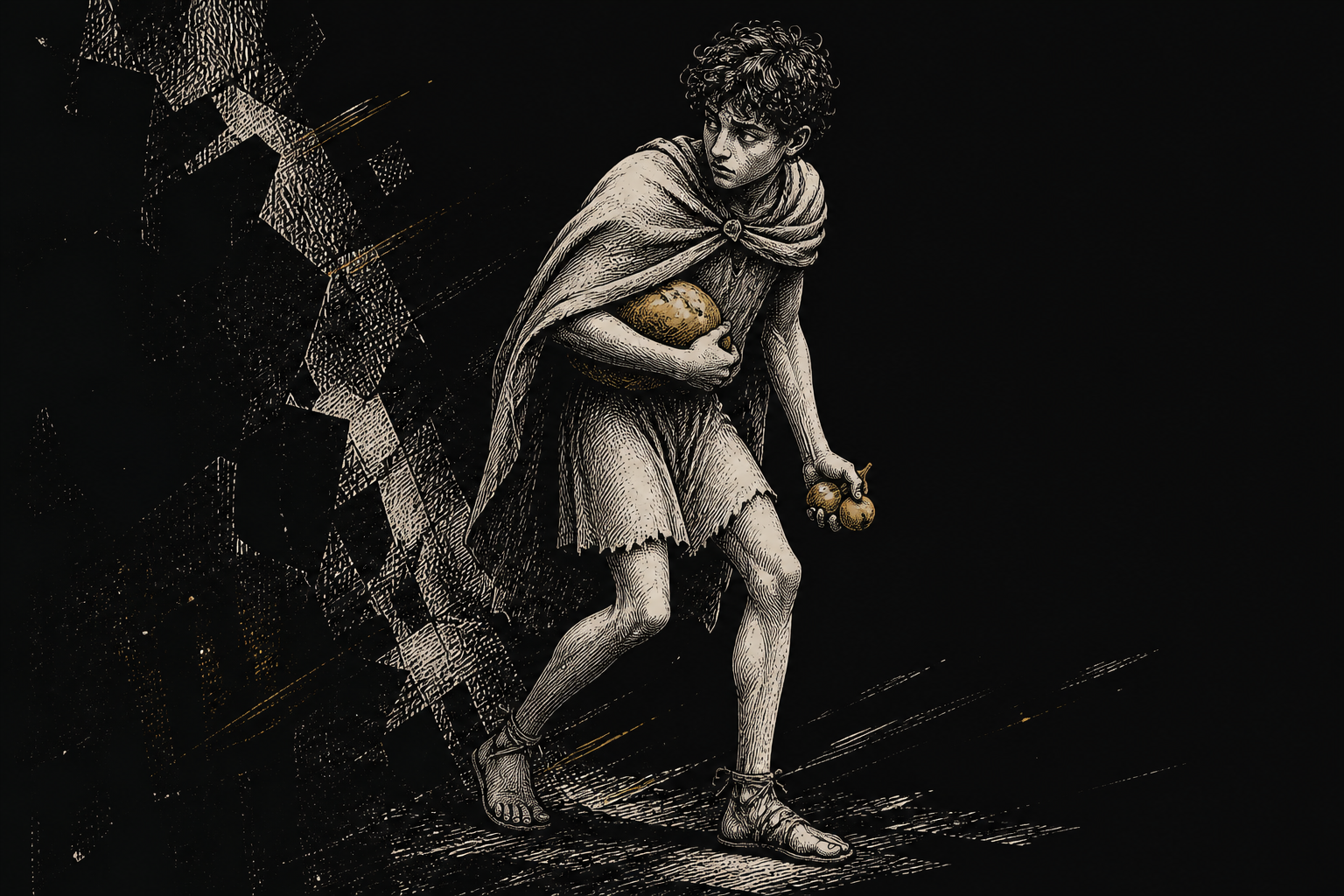
A gloomy Spartan youth carrying a loaf and figs under a worn cloak.

Scarcity

Resourcefulness is the test.

Same rule
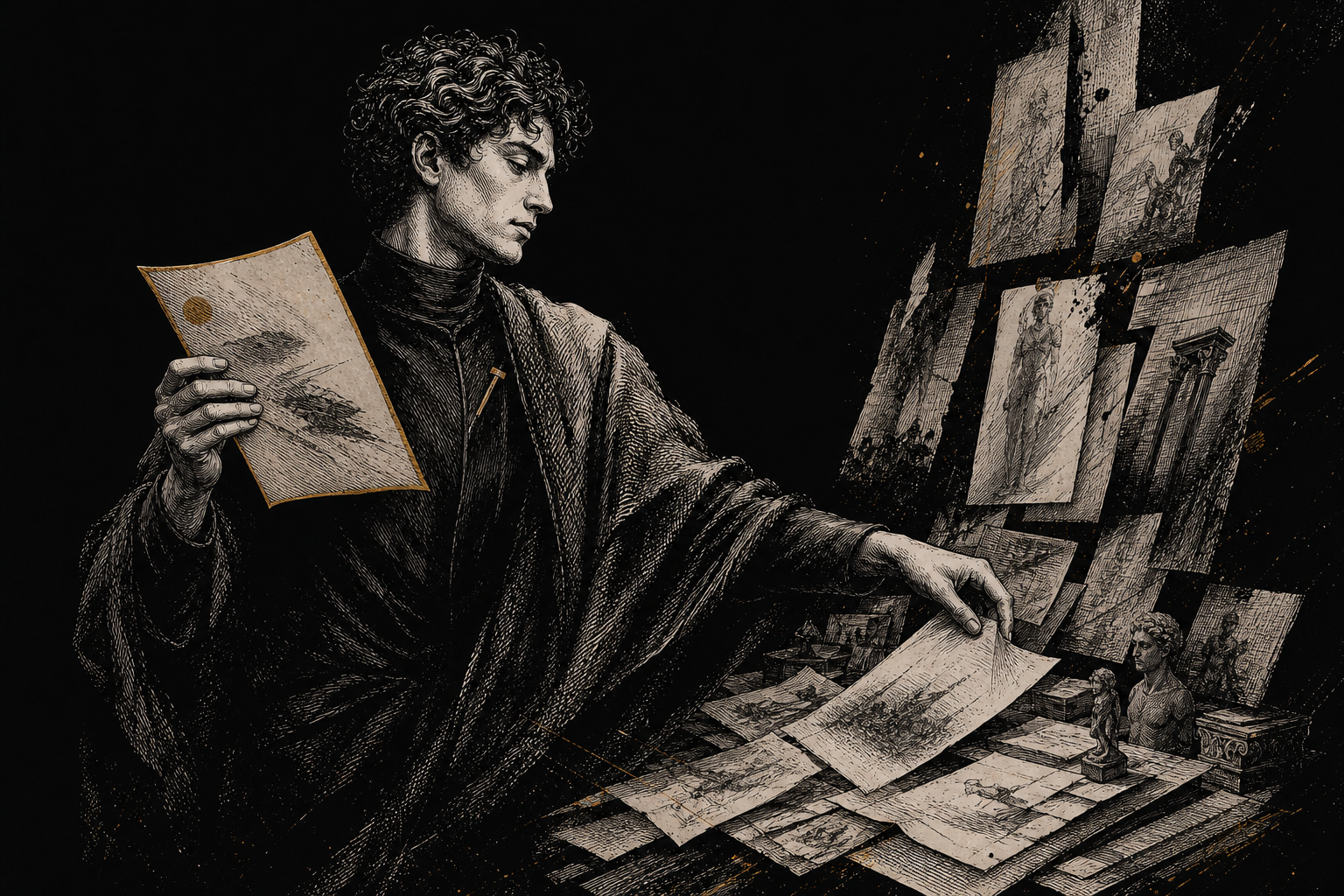
A discerning curator selecting one work from many alternatives.

Abundance

Discernment is the test.

AI multiplies possibilities. You decide what deserves to remain.

Choose. Verify. Refine.

Iron sharpens iron

Proverbs 27:17

AI alone

Feedback without stakes

Single perspective

Culture at a distance

✦

AI + people

Real feedback

Challenges your framing

Exposes you to culture

AI can help you practice. People sharpen your thinking.

The human edge

Insights · AI

AI can imitate patterns.

Your perspective comes from what you have lived.

What you notice and what you reject depend on who you are.

Experience ⟶ Taste ⟶ Judgment
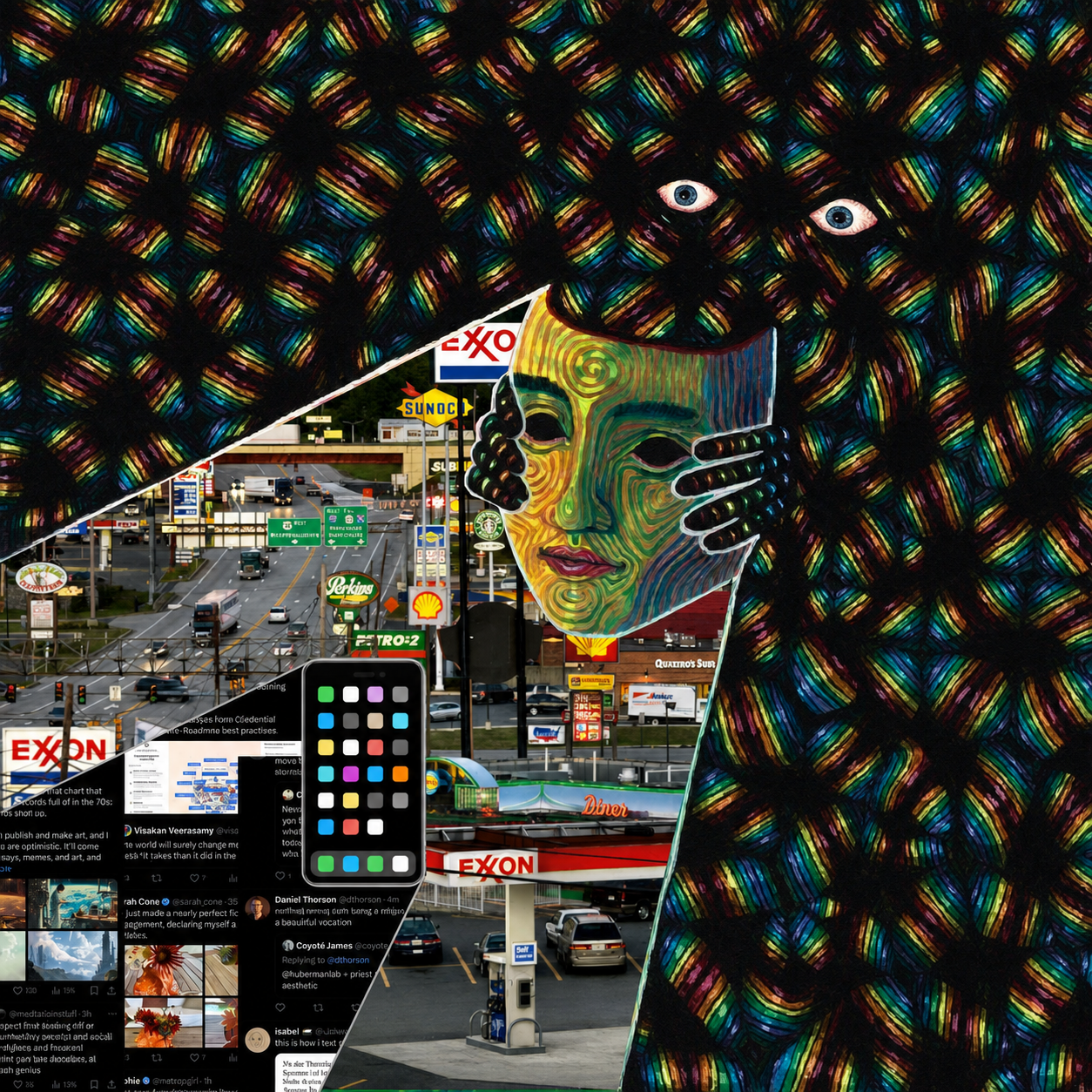
A vivid colored collage of a person holding a painted mask before layered urban, digital, and social imagery.

Don’t build your work on rented land

Digital sovereignty means the system survives when a supplier changes.

Digital feudalism One company owns the stack

interface

agents + automations

memory + knowledge

model

They change the rules price ↑ · API shifts · product sunset

Your workflow breaks.

OR

Digital sovereignty You own the system

open files + data

your knowledge + workflows

portable interfaces

model A → model B

A supplier changes swap the model, preserve the system

Your workflow continues.

Own the system. Rent the intelligence.

References

Bastani, Hamsa, Osbert Bastani, Alp Sungu, Haosen Ge, Ozge Kabakcı, and Rei Mariman. 2025. “Generative AI Without Guardrails Can Harm Learning: Evidence from High School Mathematics.” Proceedings of the National Academy of Sciences 122 (26). https://doi.org/10.1073/pnas.2422633122.
Bentham, Jeremy, and Willey Reveley. 1843. Plan of the Panopticon. Wikimedia Commons, https://commons.wikimedia.org/wiki/File:Penetentiary_Panopticon_Plan.jpg.
ChessBase. n.d. How Technology Is Changing Our Minds. Https://en.chessbase.com/post/how-technology-is-changing-our-minds/25.
@clipsofcrypto. n.d. Post on AI Writing, Templates, and “Sea Level”. X, https://x.com/clipsofcrypto/status/2088827366491762895.
Competition and Markets Authority. 2025. CMA Independent Inquiry Group Publishes Provisional Findings in Cloud Services Market Investigation. Https://www.gov.uk/government/news/cma-independent-inquiry-group-publishes-provisional-findings-in-cloud-services-market-investigation.
Dai, David Wei, Hua Zhu, and Guanliang Chen. 2025. “How Does Interaction with LLM-Powered Chatbots Shape Human Understanding of Culture? The Need for Critical Interactional Competence (CritIC).” Annual Review of Applied Linguistics 45: 28–49. https://doi.org/10.1017/S0267190525000054.
Doctorow, Cory. 2021. Reverse Centaurs and the Failure of AI. Pluralistic, https://pluralistic.net/2021/02/17/reverse-centaur/.
Ducat, Jean. 2006. Spartan Education: Youth and Society in the Classical Period. Classical Press of Wales.
European Commission. n.d. Data Act Explained. Https://digital-strategy.ec.europa.eu/en/factpages/data-act-explained.
European Union. 2023. Regulation (EU) 2023/2854 on Harmonised Rules on Fair Access to and Use of Data (Data Act). Https://eur-lex.europa.eu/legal-content/EN/TXT/?uri=CELEX:32023R2854.
Galindo, Luis. 2024. “Datafeudalism: The Domination of Modern Societies by Big Tech Companies.” Philosophy & Technology 37: 121. https://doi.org/10.1007/s13347-024-00777-1.
Gruhn, Niklas. 2026. Don’t Be a Meat Proxy. Personal website, https://gruhn.me/blog/2026-08-03/.
Heinemeier Hansson, David. 2026. Rails World 2026 Opening Keynote. Ruby on Rails, YouTube, https://www.youtube.com/watch?v=V9SxpJpHuus.
Henle, E. Adrian. 2026. Let Me Ask Claude for You. Personal website, https://henletech.net/2026/08/06/let-me-ask-claude-for-you.html.
Information Commissioner’s Office. n.d. Video Surveillance, Including Guidance for Organisations Using CCTV. Https://ico.org.uk/for-organisations/uk-gdpr-guidance-and-resources/cctv-and-video-surveillance/guidance-on-video-surveillance-including-cctv/.
Isenberg, Greg, and Nicolas Cole. 2026. $30M Writer: Never Write AI Slop Again. YouTube, https://www.youtube.com/watch?v=YuOSyRj3sXg.
Jevons, William Stanley. 1865. The Coal Question: An Inquiry Concerning the Progress of the Nation, and the Probable Exhaustion of Our Coal-Mines. Macmillan; Co. https://www.econlib.org/library/YPDBooks/Jevons/jvnCQ.html.
Kennell, Nigel M. 2010. Spartans: A New History. Wiley-Blackwell.
Meservey, Lulu Cheng. 2026. Post Comparing Spartan Training with AI-Assisted Work. X, https://x.com/lulumeservey/status/2092369479934038461.
National Institute of Standards and Technology. n.d. Cloud Computing Synopsis and Recommendations. Special Publication 800-146. National Institute of Standards; Technology. https://nvlpubs.nist.gov/nistpubs/legacy/sp/nistspecialpublication800-146.pdf.
NET Bible. n.d. Proverbs 27:17. Bible.org, https://classic.net.bible.org/passage.php?passage=Pro+27:17.
Plutarch. 1914. “The Life of Lycurgus.” In Plutarch’s Lives, Volume i. Loeb Classical Library 46. Harvard University Press. https://penelope.uchicago.edu/Thayer/E/Roman/Texts/Plutarch/Lives/Lycurgus*.html.
Quote Investigator. 2011. Quote Origin: If You Want Jobs Then Give These Workers Spoons Instead of Shovels. Quote Investigator, https://quoteinvestigator.com/2011/10/10/spoons-shovels/.
Sefaria. n.d. Taanit 7a:12. Https://www.sefaria.org/Taanit.7a.12.
The Rails Foundation. 2026. Rails World 2026 Opening Keynote – DHH. LinkedIn, https://www.linkedin.com/posts/ruby-on-rails-org_rails-world-2026-opening-keynote-dhh-activity-7508700625996775424-KPoz.
U.S. Department of Energy. 2023. Rebound Effect Analysis. U.S. Department of Energy. https://www.energy.gov/sites/default/files/2023-03/PH_FR_TSD_2023-03-31.pdf.
Wordorigins.org. n.d. Centaur, Reverse Centaur. Https://wordorigins-org.ghost.io/centaur-reverse-centaur-free-copy/.
Xenophon. 1925. “Constitution of the Lacedaemonians.” In Xenophon: Scripta Minora. Loeb Classical Library 183. Harvard University Press. https://topostext.org/work/798.