Warehousing trends and innovations
Prediction is very difficult, especially if it’s about the future. Niels Bohr
Learning objectives 📘
- Discuss warehouse trends and innovations.
- Identify the challenges of smart warehouses.
External change forces
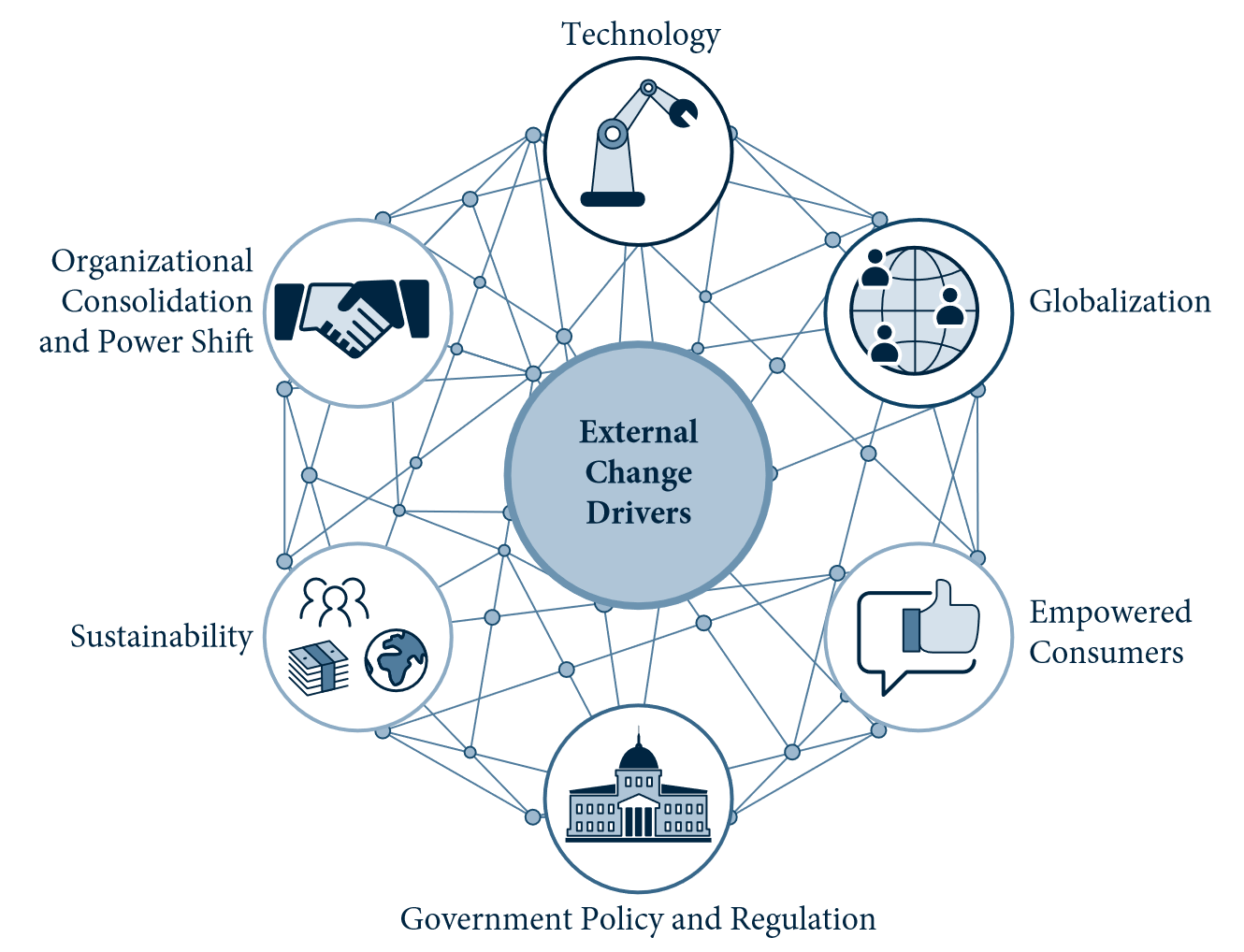
Figure 1: The confluence of external change forces in the 21st century has dramatically changed the economic landscape and provided an opportune business climate for the development of global supply chains and supply chain management (Coyle et al. 2020).
Challenges
According to Richards (2018), the greatest challenge is the growth in e-commerce, resulting in:
- smaller, more frequent orders;
- shorter order lead times;
- next-day delivery will be the norm;
- same-day delivery in certain circumstances;
- an increase in home delivery;
- increased personalization of items.
Other challenges include:
- A greater proliferation of product lines or SKUs.
- A requirement for accurate information in real time.
- The need to achieve the perfect order to ensure competitiveness.
Factors shaping the future of warehousing
The following factors are supported by the cited literature and primary records:
- Economic and population growth: Increasing demand for goods and services will drive the need for more efficient and scalable warehousing solutions.
- Sustainability: Warehouses will need to adopt greener practices to reduce their environmental impact and meet regulatory and consumer expectations.
- Pressure to collaborate: Shared resources and collaborative logistics will become essential to optimize costs and improve efficiency.
- Shortage of warehouse space: Innovative solutions like underground or vertical warehouses will address the growing scarcity of land.
- Generation Z: This tech-savvy generation will push for digitalization and hyperautomation in warehouse operations.
- 3D printing: On-demand manufacturing will reduce inventory needs and transform traditional warehousing models.
Smart warehouse
A smart warehouse is an automated, unmanned, and paperless facility that streamlines the operations of pickup, delivery, and bookkeeping. (Liu et al. 2018)
The fundamental characteristics of smart warehouses can be categorized as follows (Zhen and Li 2022):
- Information Interconnection: Seamless integration of the virtual and physical worlds through cyber-physical systems (CPSs).
- Equipment Automation: Enhanced productivity and reduced reliance on manual labor through advanced automation technologies.
- Process Integration: Streamlined coordination and management of warehouse operations.
- Environmental Sustainability: Focus on minimizing energy consumption and reducing carbon emissions.
Information interconnection
- A CPS1-based smart warehouse contains four main components:
- CPS devices
- Radio-frequency identification (RFID), narrowband IoT (NB-IoT), Wi-Fi, near-field communication (NFC), fifth-generation mobile networks (5G), global positioning systems (GPS), wireless sensor networks (WSNs), and robotics.
- Inventories
- Status and location context according to the data reported by the attached devices.
- Robots
- Collaboratively perform tasks that are repetitive or harmful to people.
- Human beings
- Use recognized gestures or other activities to perform warehouse operations.
- CPS devices
- Information interconnection technology provides ways to establish warehouse information collection and exchange.
- The implementation of IoT-based WMS can also facilitate warehouse operation.
Efficient communication scheduling
How to guarantee efficient communication when collecting sensing data from thousands of CPS devices?
- RFID is more suitable for localization in Industry 4.0:
- GPS (works well only outdoors)
- Wi-Fi (locates a person carrying a cellphone)
- Bluetooth (limited battery)
- Future: tools and products affixed with sensors and RFID tags.
- Benefits of RFID:
- No line-of-sight requirement (\(n\) objects can be identified simultaneously).
- Battery-free operation (passive tags have a nearly unlimited service life).
- Low cost (five cents).
- Small size (as thin as paper).
Accurate and robust localization
- RFID localization systems are evaluated against four metrics:
- Availability:
- System consists of commercial off-the-shelf (COTS) devices.
- Localization algorithms are only installed as software modules.
- Mobility:
- System covers a vast region in a mobile manner to save costs.
- Reliability:
- System provides fine-grained localization accuracy (i.e., cm-level) with high confidence.
- Scalability:
- System is scalable to a large number of tags.
- Depends on computational complexity1 of localization algorithms.
- Availability:
Multi-robot collaboration
- Multi-robot tasks involve:
- Multiple jobs executed on different robots.
- End-to-end deadline requirements.
- Local coordination among robots.
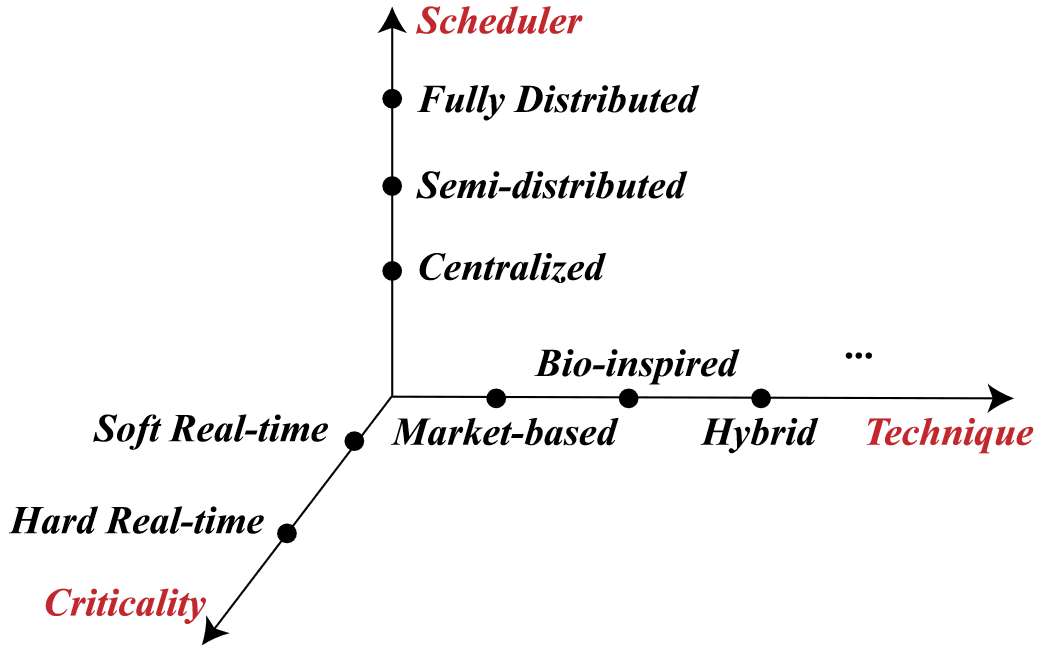
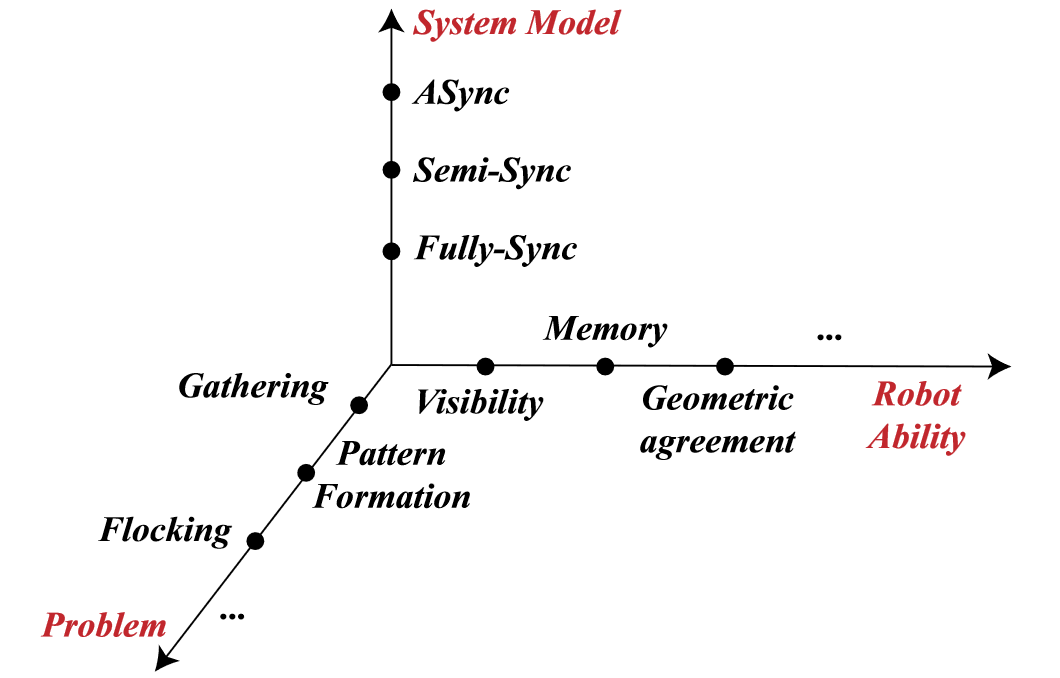
How to integrate global task scheduling and local coordination in MRS1?
Multi-Robot task scheduling vs. local coordination
Human activity recognition
- Human activity recognition + smart warehouse = intelligent services.
- CPS1 will also focus on monitoring physical and physiological information of humans:
- remote operations involving humans and machines.
- worker fatigue, illness, or injury.
- sorting and delivery of goods to avoid product-classification errors.
- abnormal behavior by specific or unauthorized individuals.
| Devices | Advantages | Limitation | |
|---|---|---|---|
| Vision-based | Camera (e.g., Kinect, web camera) | Precise capture of human behavior | Vulnerable to bad lighting conditions |
| Sensor-based | On-body sensors (e.g., accelerometer and gyroscope) | Wide popularity of smart devices | Intrusive to wear sensors |
| RF-based | RF transceivers (e.g., Wi-Fi router and RFID) | No need to wear sensors (nonintrusive) | Vulnerable to environmental changes |
Industry 4.0
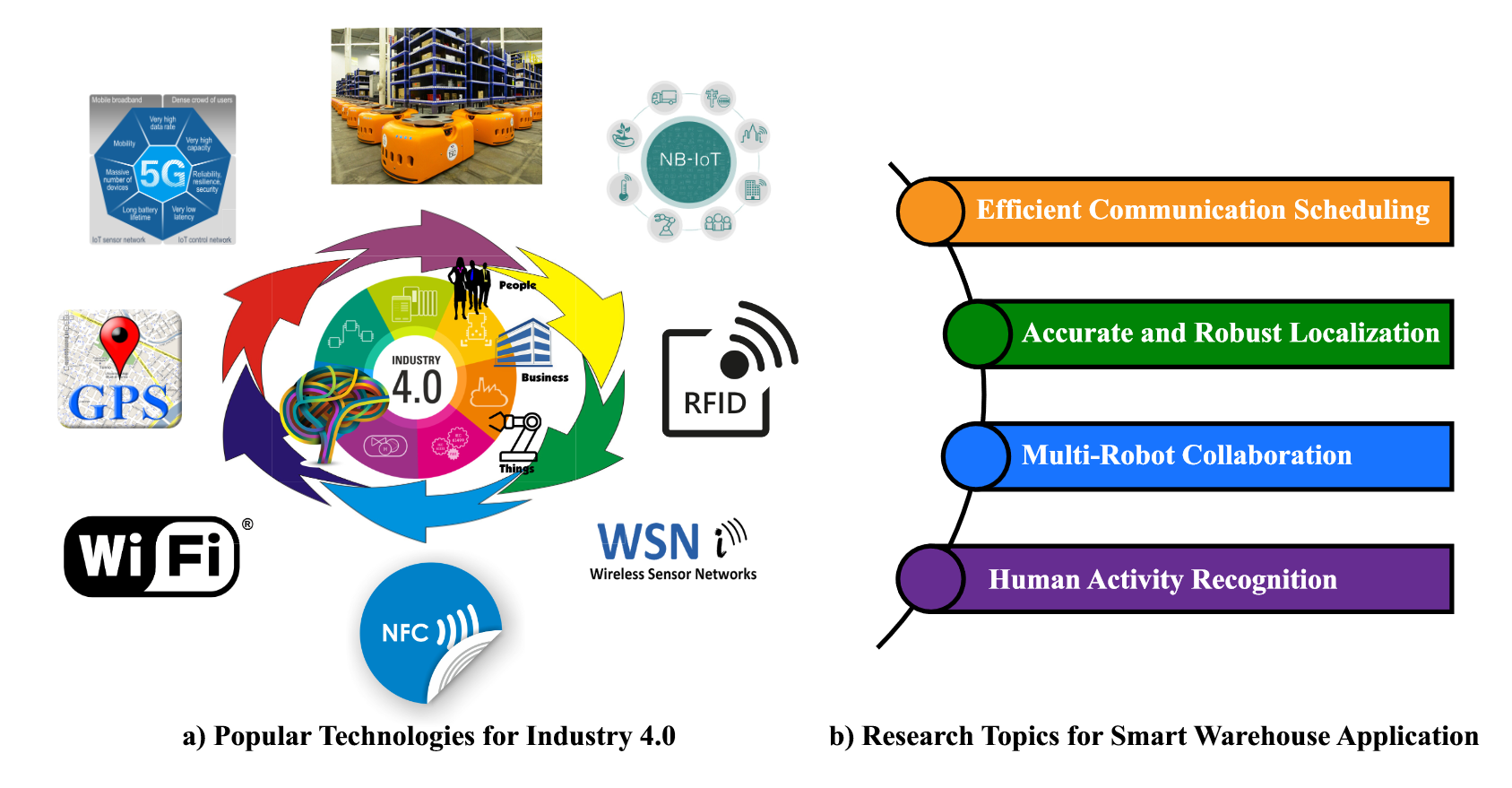
Figure 5: Popular techniques for Industry 4.0 and research topics in the context of smart warehousing (Liu et al. 2018).
Equipment automation
- Automation is the technology used to process tasks with minimal manual labor.
- Benefits include:
- increased efficiency,
- agile reaction to customer orders, and
- reduction in labor costs and errors.
Exploring the relationship of strategic and tactical decisions along with some system characteristics is important when applying automation technology to warehouse design and operation.
Strategic decision
- System characteristics must be considered in warehouse design (they affect travel time).
- Movement characteristics
- Acceleration/deceleration
- Speed of the storage/retrieval (S/R) machine
- Command cycle
- Single command cycle (SC)
- Dual command cycle (DC)
- Battery management
- Battery charging
- Battery swapping
- Picking-station efficiency
- Handling speed
- Movement characteristics
Tactical decision
- Storage policy
- Dedicated: Each SKU is assigned a specific storage location, ensuring predictability and ease of retrieval but potentially leading to underutilized space.
- Class-based: SKUs are grouped into classes based on characteristics like demand or turnover, and each class is assigned to specific zones, balancing efficiency and flexibility.
- Random: SKUs are stored in any available location, maximizing space utilization but requiring robust tracking systems for efficient retrieval.
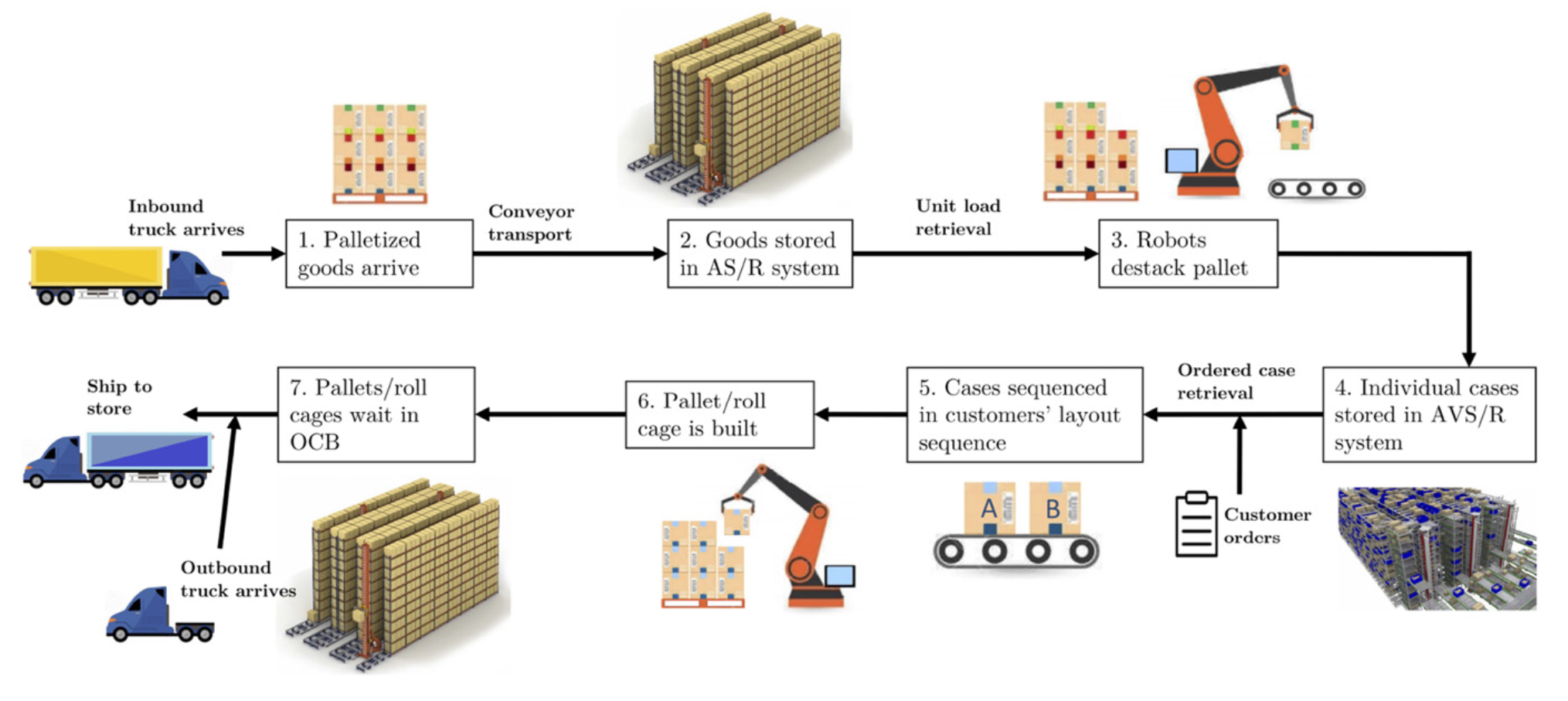
Material flow in a typical automated warehouse
Process integration
- The operations management of the various processes in warehouses is logically interrelated.
- A well-managed warehouse should consider the combinations of storage, batching, zoning, and routing policies.
Order processing
- Order processing includes:
- Order sequencing: Proper sequencing can reduce unproductive equipment movement and thus reduce total travel time and makespan.
- Order batching: Scattered demands from different orders are consolidated and fulfilled as a batch.
- Split order: Order is divided into two or more parts for picking, and different pickers may pick these parts.
Retrieval location assignment and scheduling
- Retrieval tasks create two interrelated decisions:
- Location assignment determines the locations for the items to be retrieved.
- Example: In RMFS1, selecting racks for the retrieval items.
- Example: In RMFS1, selecting racks for the retrieval items.
- Retrieval scheduling establishes the schedule of warehouse equipment for the retrieval process.
- Location assignment determines the locations for the items to be retrieved.
- The trade-off of the two decisions must be carefully considered to optimize the total travel time.
Resource allocation and differentiated service
- Some resource allocation strategies are applied to robots to enhance system utilization.
- Dedicated strategy: Assign each robot as a dedicated resource in the system.
- Pooled strategy: Group available resources to maximize utilization and counteract variability in resource management.
- E-commerce companies are moving toward customer differentiation and prioritization.
- The differentiation and prioritization in warehouse operations indicate the different classes assigned to orders.
- The class is usually based on price or customer priority.
- Orders with higher classes are attached with tighter time limits than the lower-class orders.
- Warehouses should prioritize the allocation of resources to ensure the fulfillment of higher-class orders.
- The differentiation and prioritization in warehouse operations indicate the different classes assigned to orders.
Blocking rearrangement and conflict-free routing
- Warehouse operators usually encounter some unproductive activities, such as
- rearranging blocking items and
- route congestion.
- These unproductive activities do not add value and can lead to system inefficiency.
- Special strategies should be implemented to avoid unnecessary work.
Environmental sustainability
- Sustainable logistics is carried out to
- seek improvements in environmental performance and
- gain a competitive edge in an eco-friendly way.
- Smart warehouses usually consume more energy than traditional manual warehouses.
- Sustainable warehouses aim to pursue sustainability goals, such as
- energy efficiency,
- greenhouse gas emission reduction,
- cost reduction, and
- throughput time minimization.
- Sustainability is a common thread running through strategic, tactical, and operational decisions of the sustainable warehouse.
Sustainable warehouse strategic and tactical decision
- Energy consumption and carbon emissions are major factors in sustainable warehouse design.
- Sustainability factors may be considered in energy-consumption-aware evaluation for automated systems (e.g., AS/RS, AGVs, shuttles).
- Proper storage assignment can improve picking efficiency and reduce energy consumption.
Sustainable warehouse operational decision
- Sustainability goals can be supported through warehouse operational decisions involving
- sequencing,
- scheduling, and
- power load management (i.e., avoiding electricity peaks).
Win–win of environmental and operational objectives can be achieved because eliminating useless work can improve efficiency while reducing energy consumption.
References
Warehousing - M-IEM - Breno A. Beirigo