This guidance applies to BSc and MSc colloquia. The format is similar, although the timing differs slightly. Arrange the logistics early.
For MSc theses, the colloquium typically takes place at least three weeks after the green-light meeting (diploma paperwork is prepared in the meantime). For BSc projects, schedule it when you are close to final submission and all supervisors can attend.
When scheduling the event, make sure you:
- Choose a date and time convenient for the first supervisor, second supervisor, and company supervisor.
- Choose a room in the Ravelijn building (if possible).
Don’t forget to fill out your colloquium request form.
Colloquium agenda
The colloquium agenda is as follows:
- Student Presentation: MSc 30 min, BSc 20 min
- Audience Questions: 10 min
- Supervisor Questions: 20 min
- Company supervisor
- Second supervisor
- First supervisor
- Grade Discussion (supervisors only, out of the room): 20 min
- Grade Announcement and Feedback (in the room): 5 min
- Diploma Signing
If the company supervisor cannot attend
Use one of the following options:
- Hybrid participation: Your company supervisor can participate remotely. You can arrange a call for the presentation and Q&A, and we can handle the grading discussion separately.
- Feedback form: Ask your company supervisor to send a short feedback note about your internship and the impact of your assignment. This can support the evaluation and can include 1 or 2 questions to address during the colloquium.
Online colloquium
If a scheduling conflict prevents one supervisor from attending the colloquium in person, that supervisor can attend online.
One supervisor must remain in the room to host the ceremony and handle the diploma.
Follow the procedure for the supervisor who will attend online.
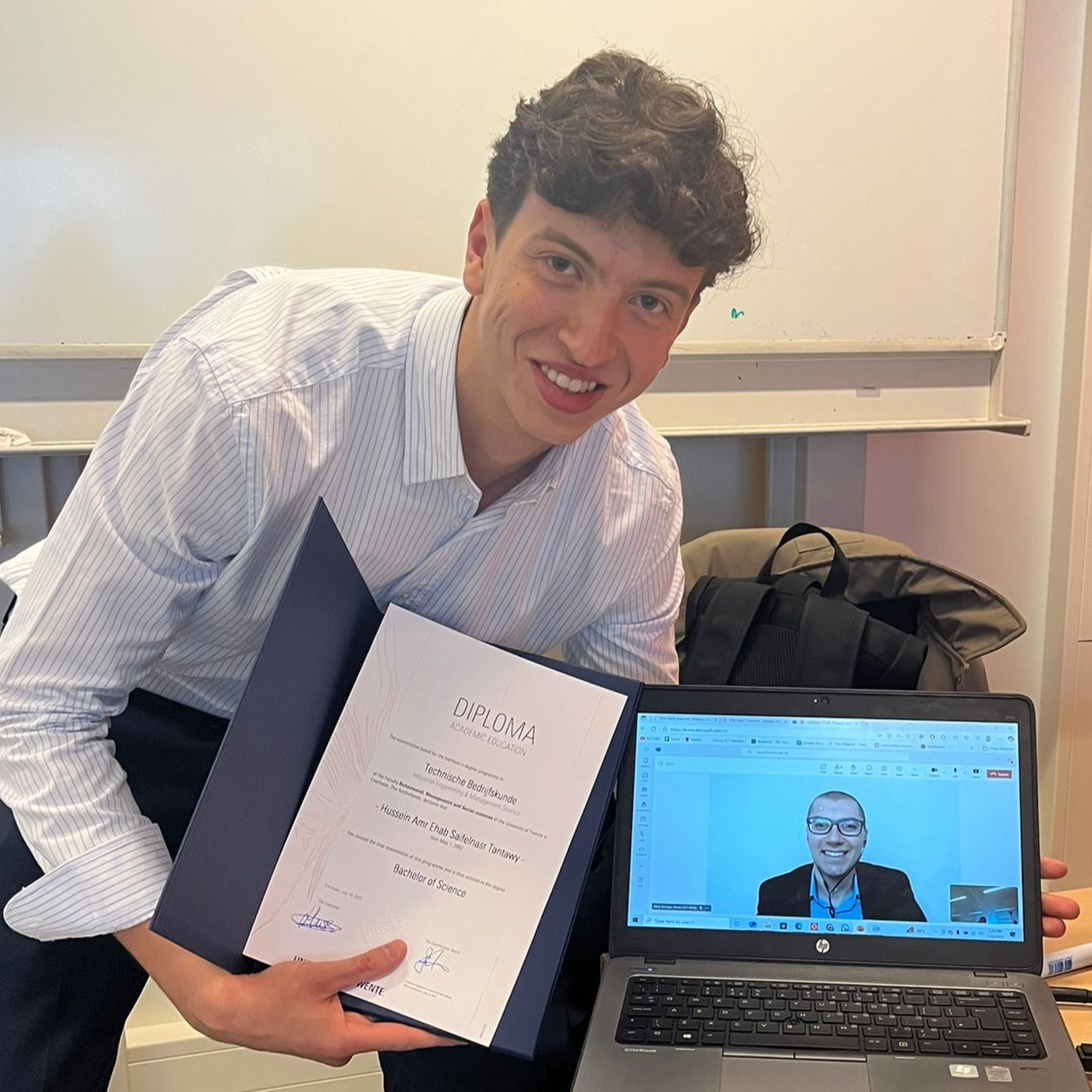
Second supervisor will attend online
Here is an agenda for a smooth colloquium when the 2nd supervisor attends online:
- Student starts the Teams meeting and ensures that the 2nd supervisor’s voice comes through clearly through the speakers (test before the colloquium starts). Make sure the sound is loud enough (whiteboard speakers are usually fine).
- The 1st supervisor welcomes the guests and opens the meeting.
- Student presents (sharing screen).
- 1st supervisor handles the questions and invites the 2nd supervisor (voice only is fine) to ask questions after the audience and company supervisor have asked their questions.
- 1st supervisor invites the company supervisor into their office, and the 2nd supervisor leaves the colloquium Teams call momentarily.
- The 2nd supervisor calls the 1st supervisor for the grading discussion.
- After grading is completed, the 1st supervisor and the company supervisor return to the room. The 2nd supervisor re-enters the MS Teams call.
- The 1st supervisor gives feedback to the student, announces the grade, and congratulates them.
First supervisor will attend online
Here is an agenda for a smooth colloquium when the 1st supervisor attends online:
- Student starts the Teams meeting and ensures that the 1st supervisor’s voice comes through clearly through the speakers (test before the colloquium starts). Make sure the sound is loud enough (whiteboard speakers are usually fine).
- The 2nd supervisor welcomes the guests and opens the meeting.
- Student presents (sharing screen).
- The 2nd supervisor handles the questions and invites the 1st supervisor (voice only is fine) to ask questions after the audience and company supervisor have asked their questions.
- The 2nd supervisor invites the company supervisor into their office and joins the Teams meeting together with the 1st supervisor.
- After grading is completed, the 2nd supervisor and the company supervisor return to the room.
- The student ensures the 1st supervisor can be heard clearly in the room.
- The 1st supervisor gives feedback to the student, announces the grade, and congratulates them.
Preparing the presentation
Aim to create a presentation that is understandable for both non-specialists and IEM audiences. A practical structure is:
- Introduction. Start with an overview of the company, the problem, and the assignment. This part should be understandable to a general audience.
- Solution Design. Present the core of your solution, tailored for an Industrial Engineering and Management (IEM) audience.
- Results and Conclusions. End with the results and conclusions, presented in a way that both IEM and non-IEM attendees can understand.
Complete these practical preparations:
- Arrive 10 to 15 minutes early to test the room setup (slides, audio, clicker, screen sharing).
- Dress at least smart casual, and greet the company supervisor and guests to set a professional tone.