In academic writing, method and methodology name different concepts. Using them precisely lets readers and examiners assess whether your choices are justified.
Definitions
- A method is a specific technique or procedure (what you do).
- A methodology is the broader research design and rationale (why this is the right way to answer the question), including theoretical framing, validity considerations, and principles for choosing methods (Aguiar, 2024).
For example, in a study aiming to improve service levels in a mobility service, the method might involve implementing a reinforcement learning algorithm to optimize vehicle routing based on historical data. Meanwhile, the research methodology would justify why reinforcement learning is an appropriate approach for the research question, compared to alternatives (e.g., optimization, simulation, or empirical analysis), and how you will evaluate outcomes and validity.
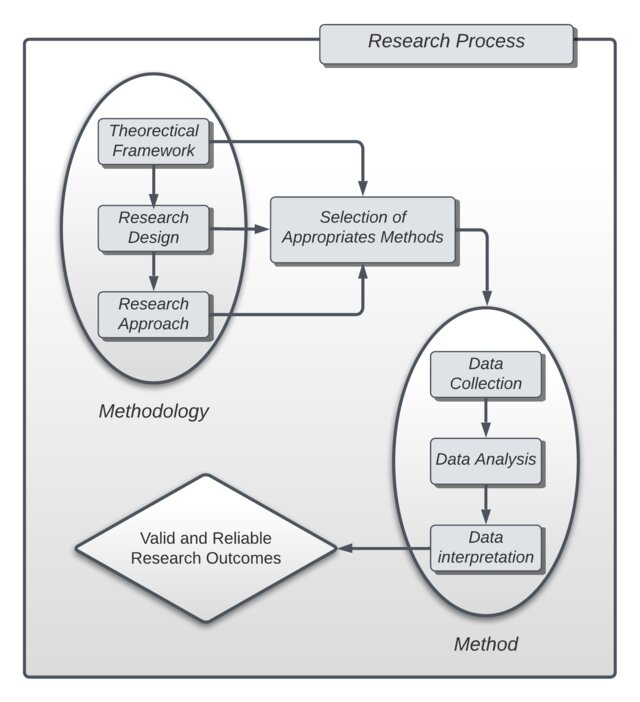
Figure 1 shows how the method and methodology are distinct yet interconnected components of research design.
Where this distinction appears in theses
Literature reviews (PRISMA and systematic searching)
PRISMA is an evidence-based guideline for reporting systematic reviews (Page et al., 2021). In a thesis, the distinction is:
- Method(s): the concrete steps you took (databases, search strings, eligibility criteria, screening, and what you extracted).
- Methodology: why a systematic approach fits your question, how you reduced selection bias, and how your process supports a credible gap statement.
Research questions (RQ frameworks and “RQ methods”)
Frameworks like PICO are tools for designing an answerable research question: they help you make the context, comparison/baseline, and outcomes explicit. That is part of your research design (methodology), not a data-collection method.
Use Research Question to tighten wording and assumptions, and Research Design to connect the RQ to evidence and evaluation choices.
Problem-solving theses (MPSM as a methodology)
In IEM projects, MPSM is often called a “method.” It defines a methodology for moving from an unclear situation to a well-argued intervention while allowing you to choose the methods used within each phase (Heerkens & Van Winden, 2021).
If you use MPSM, be explicit about the division:
- Methodology: you follow the MPSM phases (problem → analysis → solution design → implementation/evaluation).
- Method(s): interviews, process mapping, statistical analysis, simulation, optimization, experiments, and other procedures that produce the evidence you need.
For a practical introduction, see Solving Managerial Problems Systematically (MPSM).
Takeaway
A rigorous methodology makes your choices explicit and defensible. Name each method, explain the methodology that justifies it, and show how the two fit together.