Warehousing
  • Syllabus
  • Course modules
  • Assignments
  • Extra materials
  1. Warehousing
  • Warehousing
  • 1  Syllabus
  • Course modules
    • 2  Warehouse Operations and Performance Diagnosis
    • 3  Distribution Network Design and Facility Location
  • Assignments
    • 4  WH-AS1 - Diagnosis and Activity Profiling
  • Extra materials
    • 5  Introduction to warehousing
    • 6  Warehouse functions and flows
    • 7  Warehouse systems
    • 8  Warehouse functionality
    • 9  Planning scales in warehousing

Warehousing

An Optimization Perspective

An MSc course in warehouse analysis, design, optimization, automation, and operational decision-making.
Author

Breno Alves Beirigo

Warehousing

MSc course · 5 EC · 2026–2027

Warehousing by design

Learn to turn warehouse flows and operational data into defensible decisions about networks, storage, layout, automation, and order picking.

Warehouses connect supply with demand, but every square metre, movement, buffer, and technology choice creates a trade-off. This course combines systems thinking with quantitative models so that you can diagnose performance, compare designs, and justify an improvement plan.

Open the current module See syllabus

5 EC 140 hours of study

8 teaching weeks Weeks 36–43 of 2026

Five coursework milestones One real warehouse · teams of three

50% + 50% Coursework and final exam

Course modules

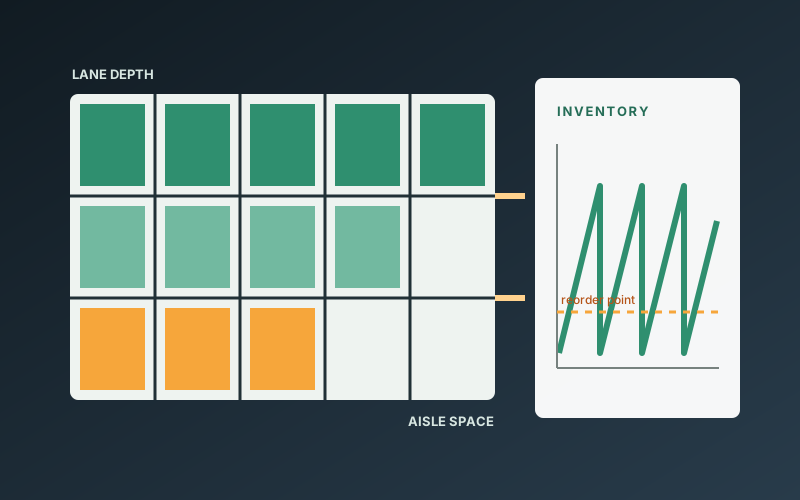
Warehouse zones connected by a highlighted material flow and a performance chart. 01/08 Diagnose

Module 01 · Week 36

Warehouse Operations and Performance Diagnosis
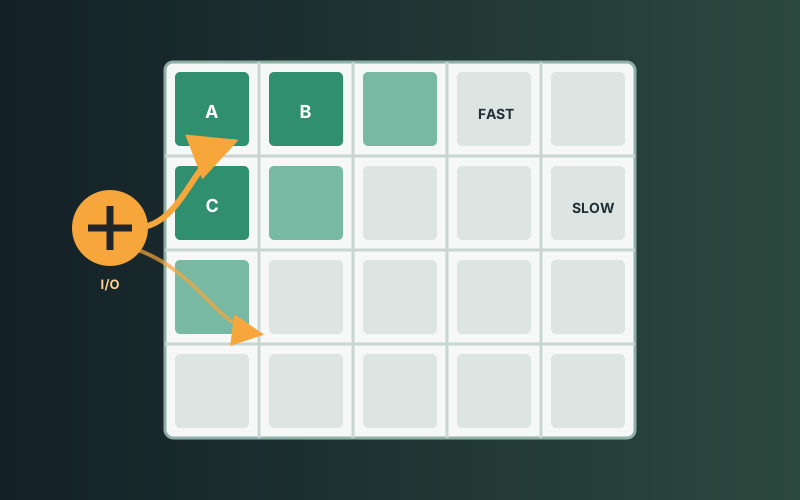
Turn warehouse flows and operating data into an evidence-based performance diagnosis.

Warehouse flowsPerformance indicatorsActivity profiling

AssignmentMilestone 1: Activity Profiling starts · Q&A

Explore module 1: Warehouse Operations and Performance Diagnosis →
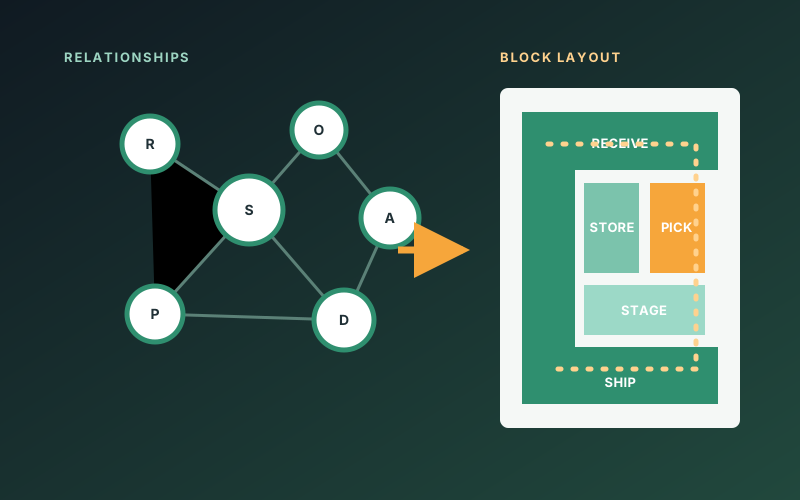
Demand locations connected to two candidate warehouses and their service areas. 02/08 Network design

Module 02 · Week 37

Distribution Network Design and Facility Location

Distribution network structures, inventory positioning, facility location, and demand allocation under cost and service requirements.

Distribution network designInventory positioningFacility location models

AssignmentAssignment 1: Activity Profiling · Q&A

Explore module 2: Distribution Network Design and Facility Location →
No matching items

Course map

Course week Monday anchor Focus
1 (W36) 31 August Warehouse Operations and Performance Diagnosis
2 (W37) 7 September Distribution Network Design and Facility Location
3 (W38) 14 September Storage Systems, Policies, and Storage Location Assignment
4 (W39) 21 September Storage Space Requirements, Forward-Reserve Allocation, and Replenishment
5 (W40) 28 September Warehouse Sizing, Layout, and Material-Handling System Design
6 (W41) 5 October Order-Picking System Design and Control
7 (W42) 12 October Robotized and Automated Warehouse Systems
8 (W43) 19 October Integrated Warehouse Design and Performance Evaluation
9 (W44) 26 October Examination

The syllabus summarizes the course structure. TimeEdit has the current appointments, times, and rooms.

The decision perspective

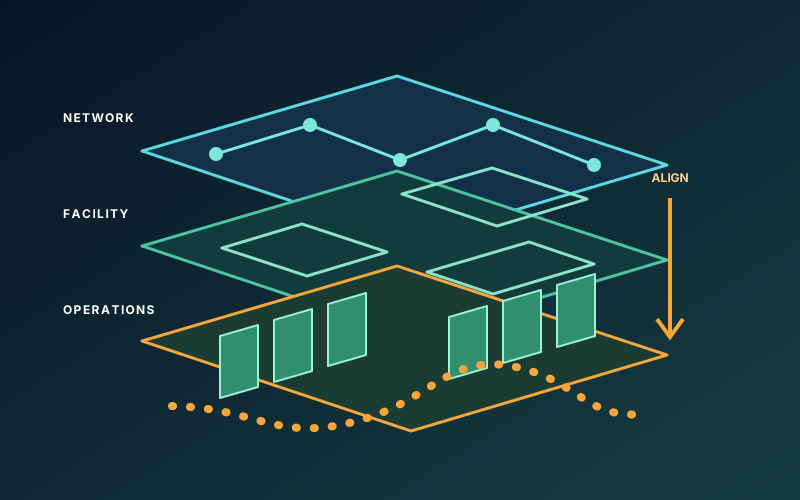
A warehouse is a coordinated operating system. Its network position, demand, storage policy, layout, equipment, people, and information determine one another.

The central question is “Which design and control decisions produce the required service with a rational use of space, capacity, time, and cost?”

What you will learn

01

Read the system

Explain the role, functions, flows, planning levels, and technology choices that shape contemporary warehouses.

02

Diagnose performance

Use operational data, activity profiles, costs, and performance indicators to identify constraints and improvement opportunities.

03

Position facilities

Evaluate distribution-network trade-offs and formulate quantitative warehouse-location decisions.

04

Design storage and layout

Compare storage policies and systems, estimate space requirements, and optimize storage allocation and facility layouts.

05

Organize order picking

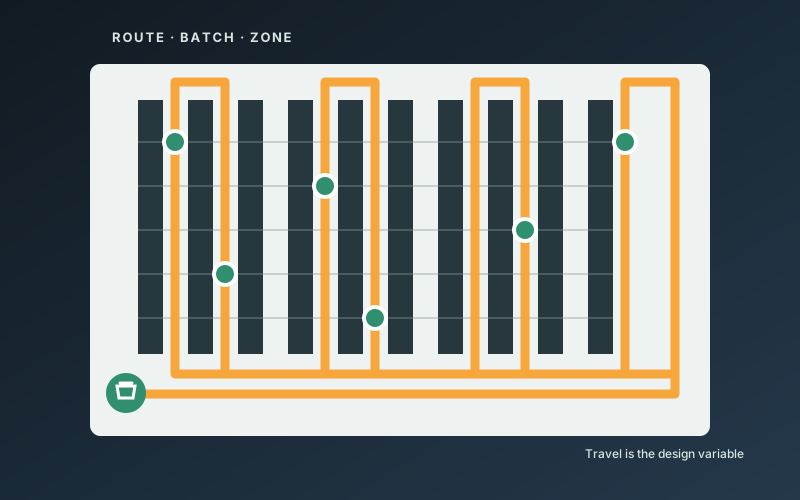
Reason about picking systems, routing, batching, zoning, travel time, and the operational consequences of automation.

06

Defend a recommendation

Combine models, evidence, assumptions, and implementation constraints into a clear and critically evaluated improvement proposal.

How the course works

Step 1

Frame the decision

Identify the operational objective, relevant system boundary, data, constraints, and trade-offs before selecting a method.

Step 2

Model and compare

Use activity analysis and quantitative models to make alternatives explicit and test the consequences of assumptions.

Step 3

Interpret and improve

Translate results into a practical recommendation, critique its limitations, and improve it using feedback and operational knowledge.

Enrolled University of Twente students should use Canvas for announcements, submission routes, grades, and current course communication. TimeEdit remains authoritative for dates, rooms, and appointments.

Find what you need

Course modules

Syllabus

Assignments

Extra materials

Course information

Course: Warehousing (202400647)
Academic year: 2026–2027
Lecturers: Breno Alves Beirigo and Fabian Akkerman
Program: MSc Industrial Engineering and Management, University of Twente

1  Syllabus